Yes
Yes, in California.
A law, an invasive list or a weed guide names this plant for where you are. You see each list, what it says and a link to read it yourself.
Add more photos of the same plant for a surer answer. Make sure they're all the same plant!
This free weed identifier is 99.0% accurate. Take a photo of any plant and find out if it's a weed where you live, down to your state. It runs on your phone, with no cloud upload, no tracking and no cost.
No country matches that
No country matches that
Possible weeds
Your recent checks
Take a clear photo of the plant, add your location, and this weed identifier tells you if the plant is a weed in your state or country, with its best guess at the plant and the lists that name it. It compares your photo with 60,902 plants, right on your device.
Check a plantGet one leaf, flower or seed head filling most of the frame and in focus. More photos of the same plant make the answer stronger.
Switch on location and it picks your country and state for you, or choose them from the lists. Weeds differ from state to state, so this changes the answer.
You get a yes, a no or a not sure, its best guess at the plant, the lists that name it, and up to 20 possible weeds ranked from most likely down.
A clear photo of one plant gets a firm answer. These are the shots that work and the ones that don't.
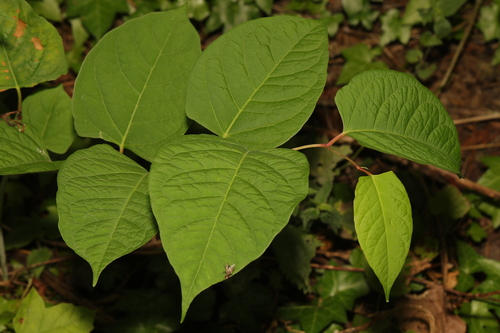 Leaves up close
Fill the frame with one plant's leaves, in focus.
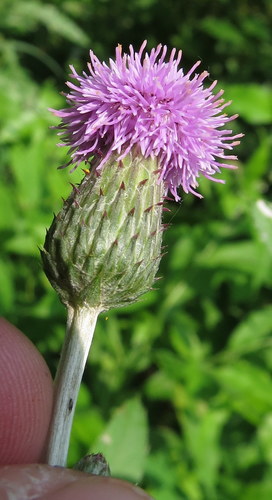 A flower in focus
One flower head, close enough to see its parts.
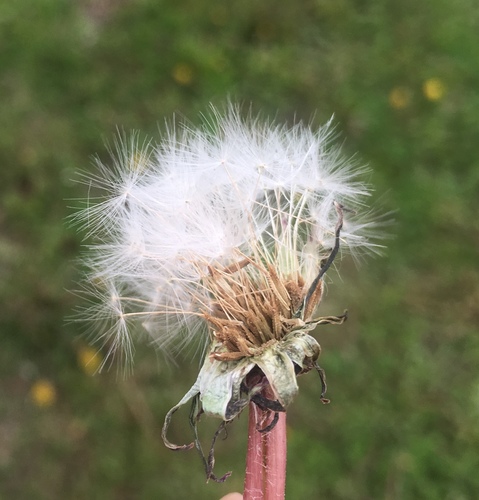 A seed head
Seed heads are as telling as flowers.
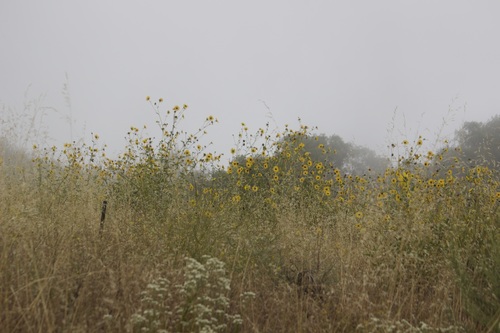 Too far away
From here it can't see any leaf or flower.
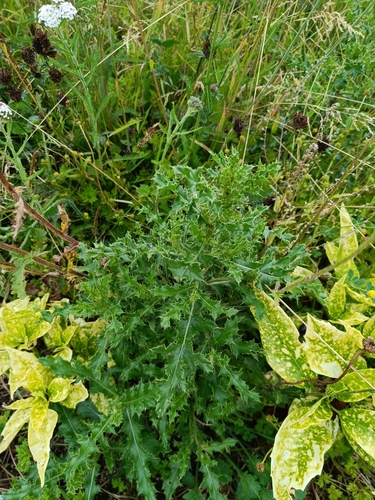 Too many plants
Which one do you mean? Get close to just one.
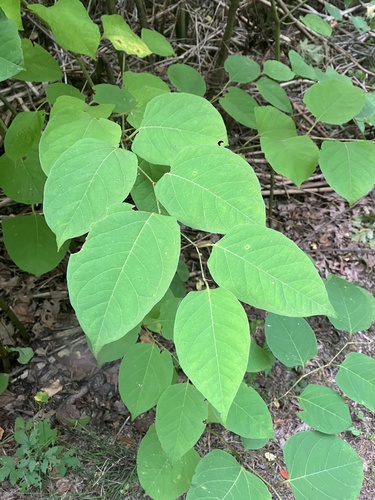 Out of focus
A blurry leaf hides what tells plants apart.
Yes, in California.
A law, an invasive list or a weed guide names this plant for where you are. You see each list, what it says and a link to read it yourself.
No, not in Scotland.
No list we hold for your area names its best guess. If a neighbouring state or another country does, it says which.
It holds back when the photo could be either, which happens on about 1 photo in 17. Add a close-up of a leaf or flower and it checks again with both photos.
These plants appear on the most countries' weed lists, out of the 5,424 listed weeds it knows.
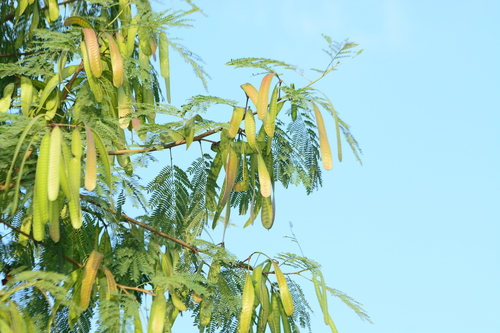 White LeadtreeLeucaena leucocephala
Listed in 113 countries
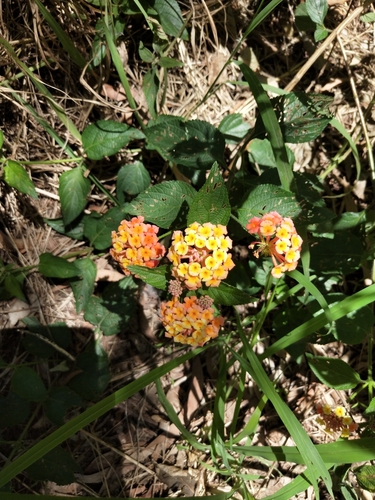 Common LantanaLantana camara
Listed in 78 countries
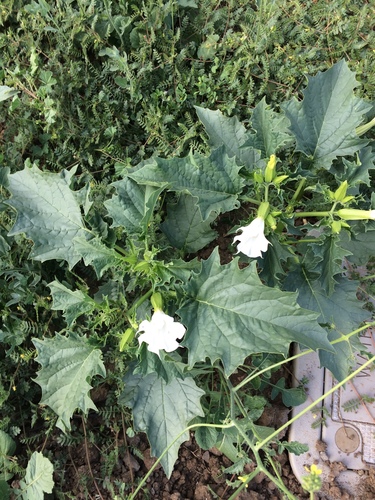 JimsonweedDatura stramonium
Listed in 71 countries
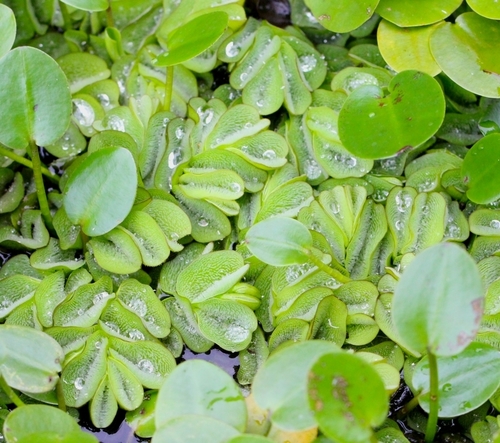 Giant SalviniaSalvinia molesta
Listed in 71 countries
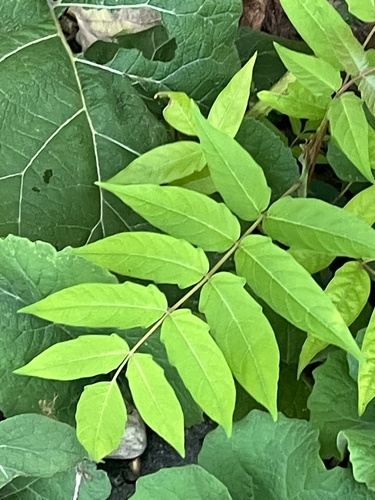 Tree-of-heavenAilanthus altissima
Listed in 69 countries
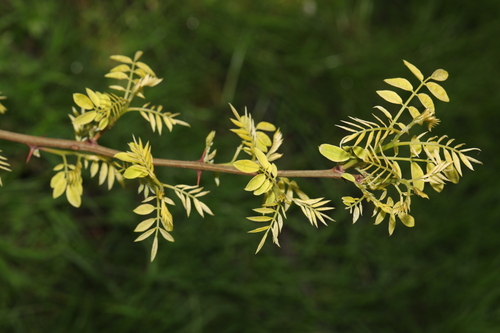 Black LocustRobinia pseudoacacia
Listed in 67 countries
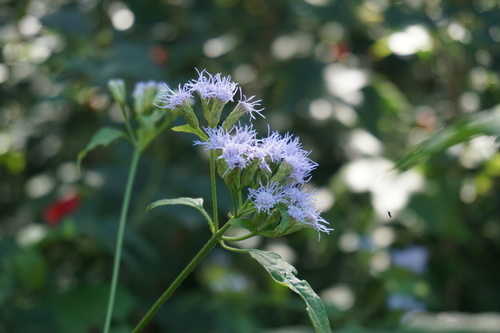 Siam WeedChromolaena odorata
Listed in 45 countries
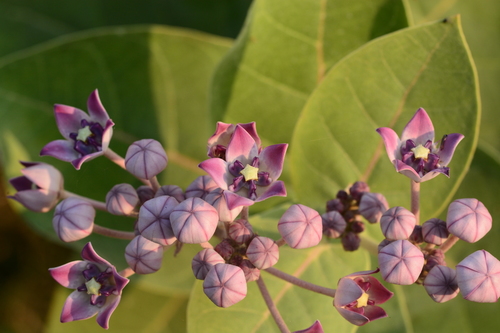 Giant MilkweedCalotropis procera
Listed in 36 countries
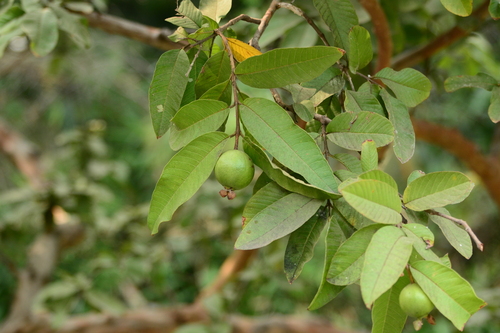 Common GuavaPsidium guajava
Listed in 36 countries
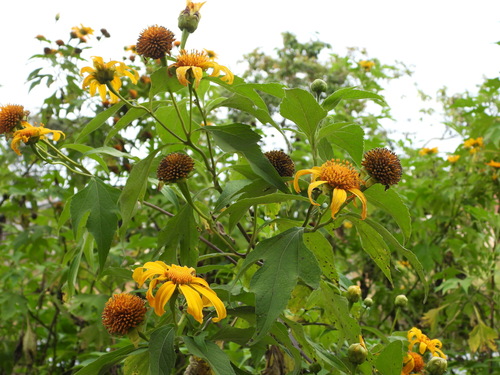 Mexican SunflowerTithonia diversifolia
Listed in 33 countries
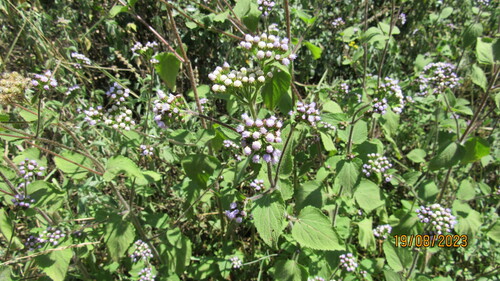 Billygoat WeedAgeratum conyzoides
Listed in 33 countries
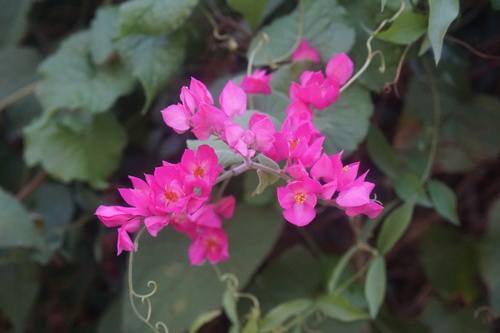 Coral VineAntigonon leptopus
Listed in 32 countries
A plant counts as a weed where you live when a law, an official invasive list or a recognised weed guide names it for your state or country. We hold 917 weed lists from agriculture departments, environment agencies, universities and weed science societies across the US, Canada, Europe and Australia.
Together they cover 5,424 of the 60,902 plants it knows. Each answer shows the lists behind it, with a link to the source.
With location on, it works out your country and state on your device, from your photo's location or your phone's. Your exact location stays on your device. To cross-check sightings, the page downloads the records for your wider region, an area about 1,100 km across. You can also choose your country and state yourself. Before you've done either, it starts from the country your connection is in.
This weed identifier is 99.0% accurate, tested on 72,879,938 plant photos it never saw while being built, as of November 2026.
Yes. Every check runs on your own phone or computer, so there is no cost per photo. There is no limit on photos and no account to create.
No. Your photo is read and checked inside your browser and never leaves your device.
No. It runs in the web browser on phones, tablets and computers.
Yes. It knows 60,902 plants, and its lists include the lawn, garden and crop weed guides of universities and agriculture departments. In the United States, crabgrass, dandelion and creeping thistle all get a yes.
Yes. It checks the lists for your state and your country, using your location or the place you choose, and tells you when another place lists the plant instead.
This weed identifier is 99.0% accurate, tested on 72,879,938 plant photos as of November 2026. Here is exactly how we tested it: which photos, which lists, what counts as right, and every count behind that number.
99.0% accurateTested on 72,879,938 photos
Every test photo is a confirmed sighting from iNaturalist that the model never saw while being built. We tested on 74,843,373 of them and counted 72,879,938, leaving out 1,664,437 from places with no weed list and 298,998 taken more than about 25 km from land.
We take the plant the sighting was confirmed as, and the state and country the photo was taken in. If a list for that state or country names the plant, the right answer is yes. If not, it's no.
It ranks the plants for each photo using nearby sightings, then adds up how likely its top plants are to be one listed for that place. At 80% or more it says yes, at 20% or less it says no, and in between it says not sure. This page uses the same rule.
Accuracy is the share of firm answers, a yes or a no, that match the right answer. Not sure answers aren't in that score, so the table below shows them separately.
| The photo shows | It said yes | It said no | It said not sure |
|---|---|---|---|
| A plant listed for that place | 14,896,396 85.5% | 449,161 2.6% | 2,069,224 11.9% |
| Any other plant | 247,897 0.4% | 52,875,263 95.3% | 2,341,997 4.2% |
67,771,659 of 68,468,717 firm answers were right, so the weed identifier is 99.0% accurate.
Read the weed row first. 23.9% of these photos show a weed, so a checker that always said no would still be right on 76.1% of them. Finding weeds is the hard part: 85.5% of weed photos got a yes, 2.6% got a no, and the other 11.9% got a not sure.
Location matters most for finding weeds: 85.5% of weed photos get a yes with location on and 51.7% from the photo alone.
| Test | Photos | Accuracy | Weeds said yes to | Other plants said no to | Firm answers given |
|---|---|---|---|---|---|
| All test photos, with location | 72,879,938 | 99.0% | 85.5% | 95.3% | 93.9% |
| All test photos, photo only | 72,879,938 | 96.8% | 51.7% | 97.0% | 89.1% |
| United States, with location | 33,359,025 | 98.9% | 86.6% | 94.2% | 93.1% |
| Outside the US, with location | 39,520,913 | 99.0% | 84.4% | 96.2% | 94.6% |
In the US, Canada, Europe and Australia we use 917 weed lists: noxious weed laws, official invasive lists, and the weed guides of universities, agriculture departments and weed science societies, state by state wherever states keep their own. Everywhere else we use each country's GRIIS checklist, counting a plant only when the checklist marks it invasive. A watch list alone doesn't count, because those plants aren't established yet, and neither does a broad reference list that names crops and trees alongside weeds.
See the full accuracy results by country Raw counts, part 1 (JSON) Raw counts, part 2 (JSON)